Film, white ink and powder: three consumables behind every transfer
The best DTF printers for 2026
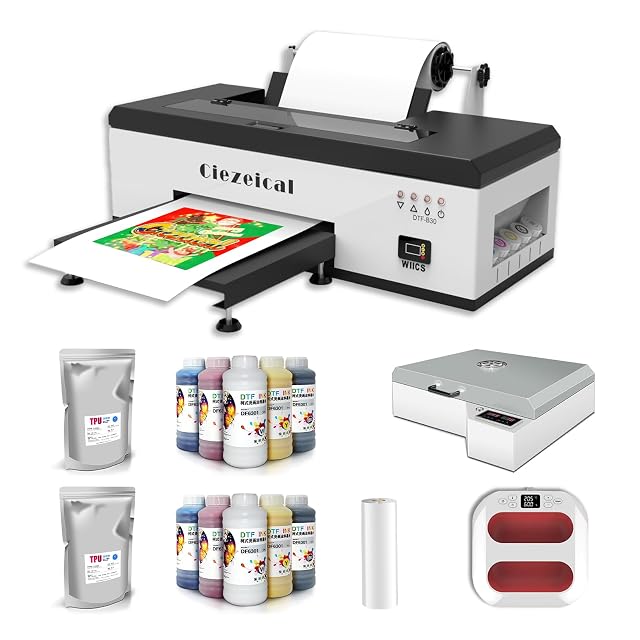
A direct-to-film printer prints a design onto a clear film with a layer of white ink behind the colours, covers it with an adhesive powder, cures it, and the finished transfer is pressed onto almost any fabric — cotton included, which is where it differs from sublimation. Print width is published for the film the machine accepts, and roll or sheet feeding decides whether long runs are unattended. White ink is the part of this technology that needs care: its pigment settles, so a printer with a circulation or stirring system keeps the lines clear, and one without asks for a daily routine. Powder and curing are either manual — shaken on and melted in an oven or under the press — or handled by a shaker unit sold with the printer; the listing names which. The RIP software that lays down the white underbase is often a licence, sometimes included and sometimes not. Then the consumables, which are the real cost: film, white and colour inks and powder, each with a published price per unit. Printing gives off fumes during curing, and the ventilation the maker specifies belongs in the plan. We compare print width, feeding, white ink management, powder and curing, software licence and consumable costs.