Airflow and temperature are two dials, and both decide the result
The best hot air rework stations for 2026
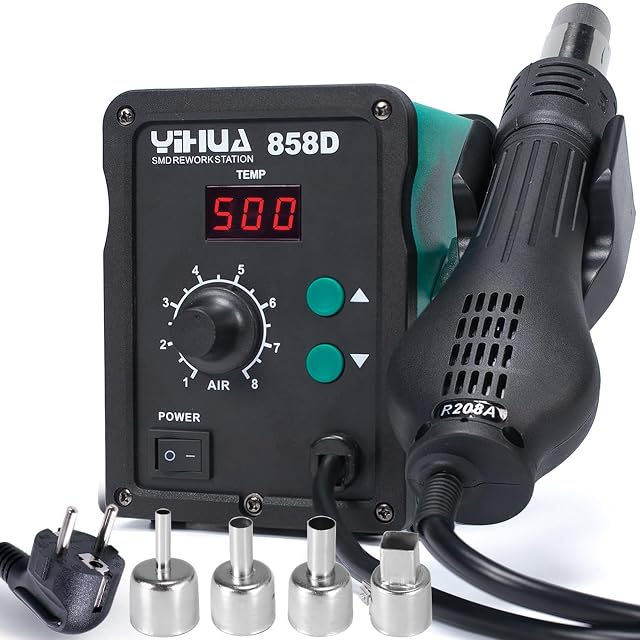
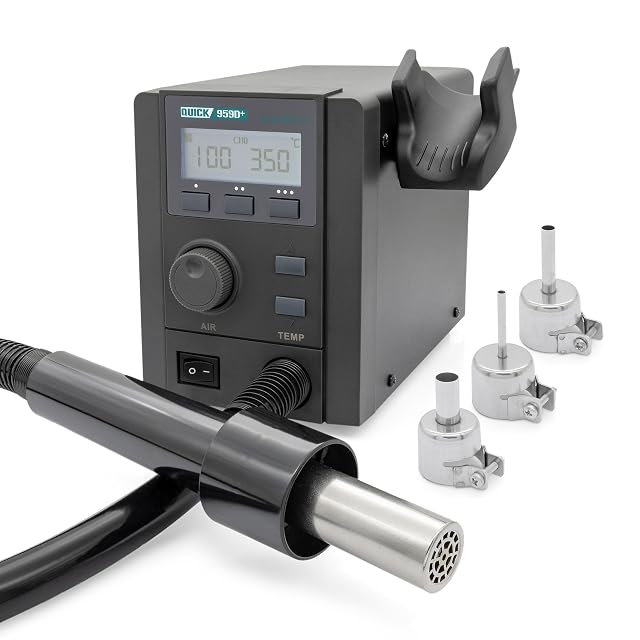
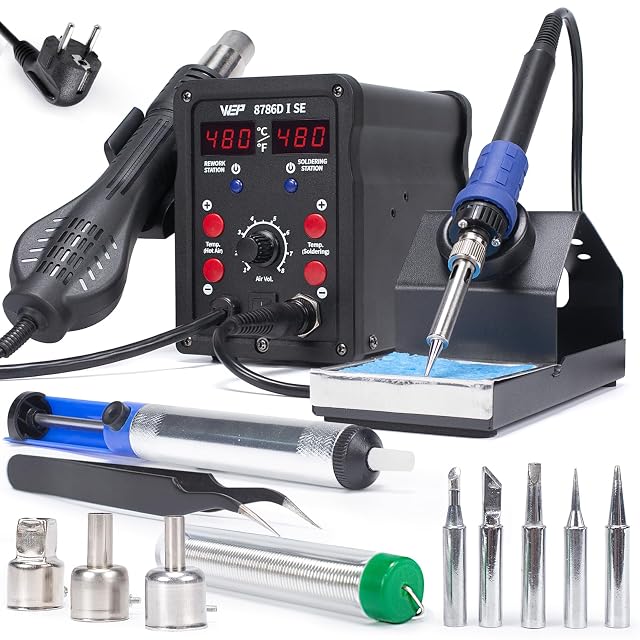
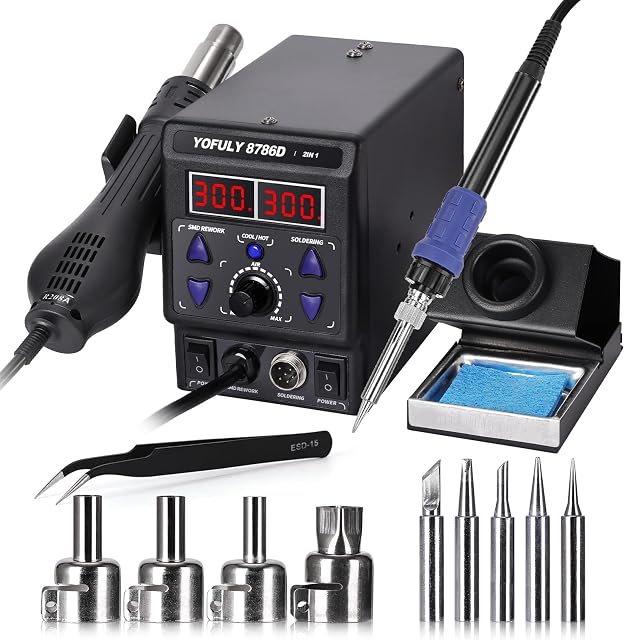
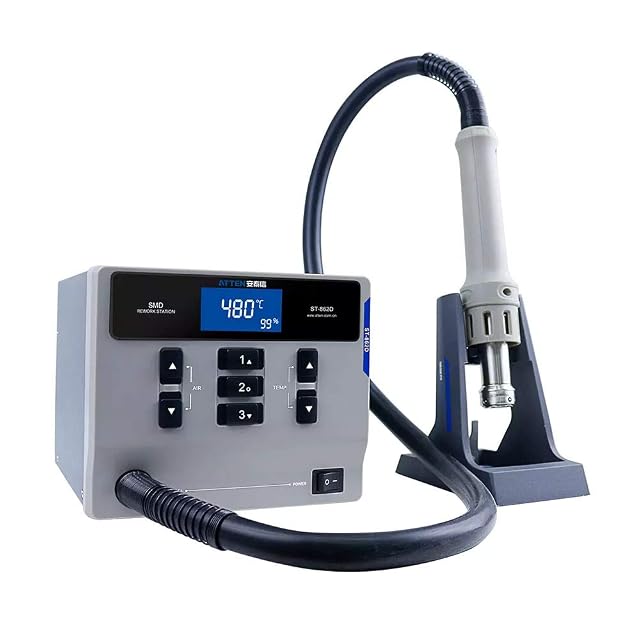
A hot air station blows heated air through a nozzle to remove and reseat surface-mount components that an iron cannot lift one pin at a time, and to shrink heat-shrink tubing. It has two controls and both matter. Temperature is published as a range, and the figure is measured at a stated point — usually close to the nozzle — so the air reaching a board a few centimetres away is cooler than the display. Airflow is a separate setting, and too much of it blows small parts off the board before the solder melts. Heater power in watts decides how quickly the air reaches temperature and holds it on a large component. The nozzle set — round in several diameters, square and rectangular for specific chips — is published per station, and replacement nozzles in a common fitting are easier to find. The handle houses the heater and, on better stations, the fan too, which makes the hose light and quiet. A combo with a soldering iron shares one power unit, saving bench space at the cost of a single point of failure. Then the cool-down: a good station keeps the fan running after the heater stops, and a handle that sits in a magnetic stand switches itself off. Hot air near plastic connectors and batteries calls for the precautions the maker lists. We compare heater power, temperature range, airflow control, nozzles, handle design, combo iron and cool-down.