Skip to content

The best microcontroller boards for 2026

A microcontroller board runs one program that reads sensors and drives outputs, without an operating system, and it is where most electronics projects begin. The first specification is the logic voltage: boards work at 5 V or 3.3 V, and connecting a 5 V sensor output to a 3.3 V input can damage it — the listing states the voltage and whether pins tolerate more. The processor family decides speed and the libraries available. Flash and RAM are published in kilobytes or megabytes and cap the size of a program and its data. Pins are counted by function — digital, analogue inputs, PWM outputs, and the buses a board exposes — and a pin count without that breakdown says little. Wireless is Wi-Fi, Bluetooth, both, or neither, and a module name on the listing is more informative than an icon. The USB connector type and whether it handles programming directly decide which cable is needed. The programming environment — the Arduino IDE, MicroPython, a vendor toolchain — decides how much existing example code applies. Then the form factor, whether headers are soldered, and genuine boards versus compatible clones, which the listing should name. We compare processor, logic voltage, memory, pin functions, wireless, USB connector and programming environment.
The machines compared on this page

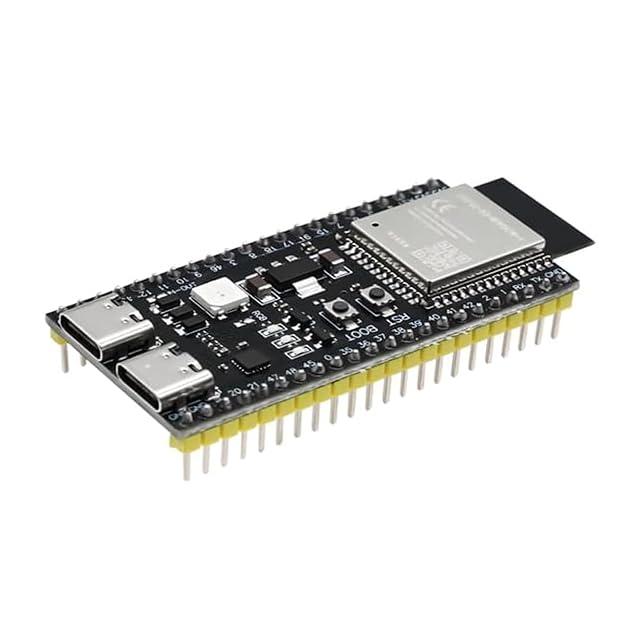
  1. GERUI ESP32-S3-DevKitC-1 with WROOM-1-N16R8 module

    ESP32-S3, up to 240 MHz, ULP coprocessor · 512 KB SRAM, 8 M PSRAM · 45 programmable GPIO · 2.4 GHz Wi-Fi and Bluetooth 5 LE · no logic voltage, USB or IDE published

    An ESP32-S3 development board on the WROOM-1-N16R8 module, with Wi-Fi, Bluetooth 5 LE, 45 programmable GPIO and external PSRAM, whose listing names neither its logic voltage, its USB connector nor a programming environment.

    Best for: A maker who already works with ESP32 boards and wants an S3 with extra PSRAM at a low price.

    ≈ £8 / 9 €

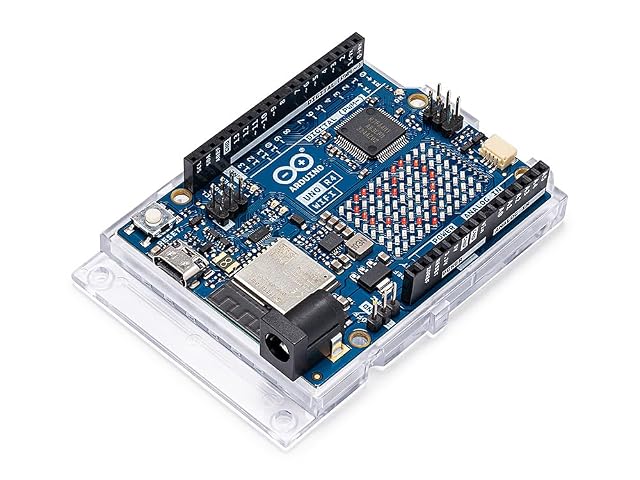
  2. Arduino UNO R4 WiFi, Renesas RA4M1 with ESP32-S3

    Renesas RA4M1 (Arm Cortex-M4) with ESP32-S3 · Wi-Fi and Bluetooth 5.0 · USB-C · CAN and Qwiic · 12-bit DAC and op-amp · 12 × 8 LED matrix · Arduino IDE

    An Arduino UNO R4 WiFi pairing a Renesas RA4M1 Arm Cortex-M4 microcontroller with an ESP32-S3 radio chip, with USB-C, CAN, a Qwiic connector, a 12-bit DAC and a 12 × 8 LED matrix on board.

    Best for: A learner or maker who wants the Arduino ecosystem with Wi-Fi, and on-board feedback from the LED matrix.

    ≈ $28 / £26 / 31 €

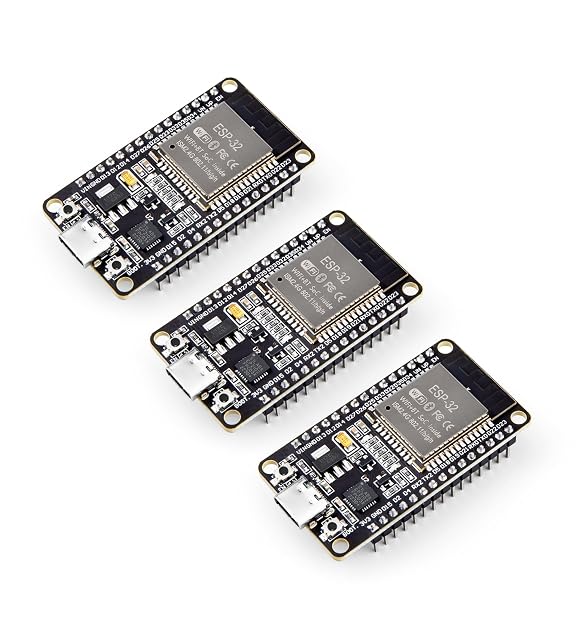
  3. ELEGOO ESP-32 boards, pack of 3, USB-C

    3 boards · dual-core 32-bit, up to 240 MHz · Wi-Fi 2.4 GHz and Bluetooth · GPIO, SPI, I2C · USB-C · Arduino IDE compatible · OTA firmware updates

    A pack of three ESP-32 development boards with dual-core 32-bit processors up to 240 MHz, Wi-Fi and Bluetooth, USB-C and Arduino IDE compatibility, whose listing gives no memory or pin counts.

    Best for: A beginner or classroom starting with ESP32 in the Arduino IDE, with spare boards for experiments.

    ≈ £20 / 21 €

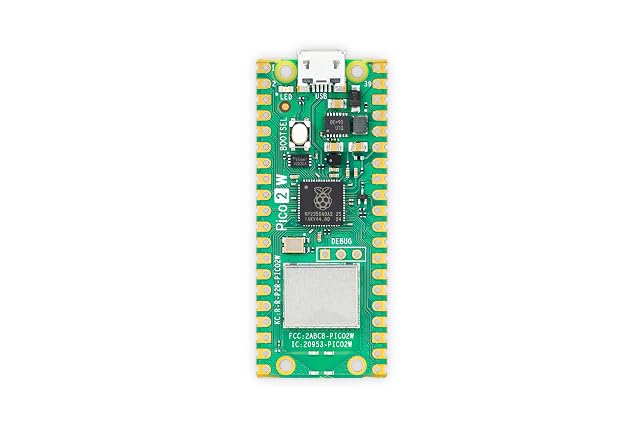
  4. Raspberry Pi Pico 2 W, Arm or RISC-V, Wi-Fi and Bluetooth 5.2

    Dual Arm Cortex-M33 or dual RISC-V Hazard3 at 150 MHz · 520 KB SRAM, 4 MB flash · 26 GPIO, 4 ADC · 12 PIO state machines · Wi-Fi 802.11n and Bluetooth 5.2 · 21 × 51 mm

    A 21 × 51 mm microcontroller board with a choice of dual Arm Cortex-M33 or dual RISC-V Hazard3 cores at 150 MHz, 26 GPIO, twelve PIO state machines, Wi-Fi and Bluetooth 5.2.

    Best for: Wireless sensor and control projects where precise peripheral timing matters.

    ≈ £10 / 12 €

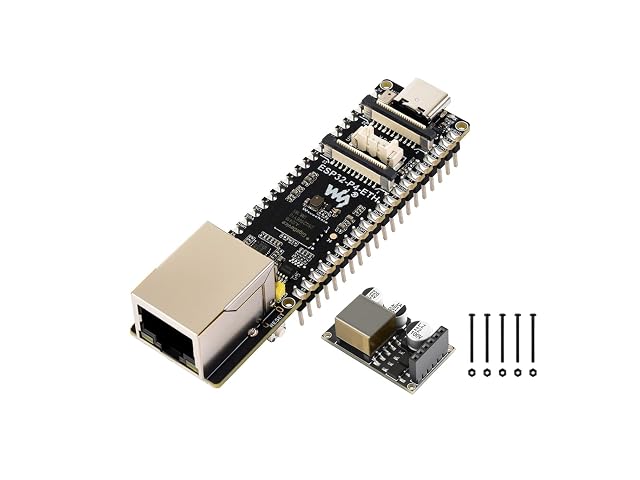
  5. Waveshare ESP32-P4-POE-ETH, Ethernet with PoE, MIPI camera and display

    ESP32-P4 RISC-V dual-core plus single-core · 32 MB PSRAM, 32 MB NOR flash · 100M Ethernet with PoE · MIPI-CSI, MIPI-DSI, USB 2.0 OTG HS · 27 programmable GPIO · H.264 encoder · no wireless listed

    An ESP32-P4 development board with 100M Ethernet and a PoE module, MIPI camera and display interfaces, USB 2.0 OTG, a microphone and an H.264 encoder, whose listing names no wireless radio.

    Best for: A wired camera, intercom or display node powered over Ethernet, where video encoding and security matter more than Wi-Fi.

    ≈ $30 / £22 / 29 €

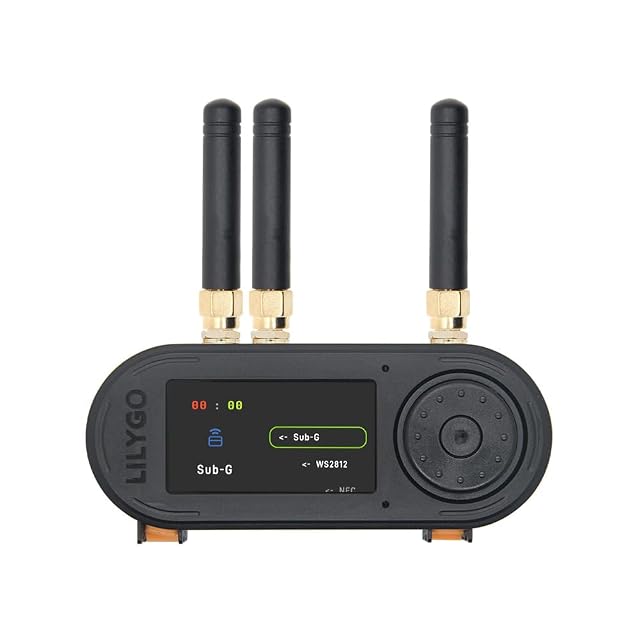
  6. LILYGO T-Embed CC1101 Plus, ESP32-S3, external antenna

    ESP32-S3 · CC1101 named in the title · external antenna · open-source hardware · documentation on GitHub and wiki only · no memory, pins, voltage or radios detailed

    An ESP32-S3 device from LILYGO with a CC1101 named in its title and an external antenna, sold as open-source hardware whose five bullets contain links to documentation rather than specifications.

    Best for: An experienced maker who already knows the T-Embed platform and will read the GitHub repository before buying.

    ≈ $75 / £71 / 82 €

A price quoted in the text of a MakerVerdict page dates from the day that page was written; the live figure beside each product is fetched while you read and replaces it.