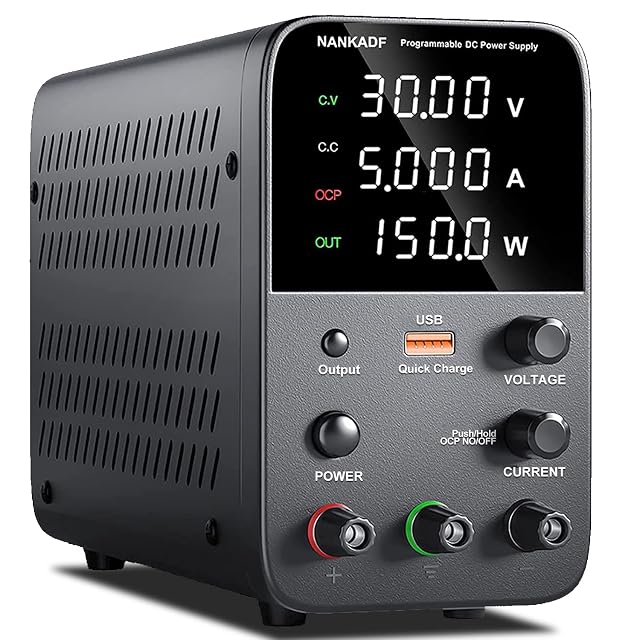
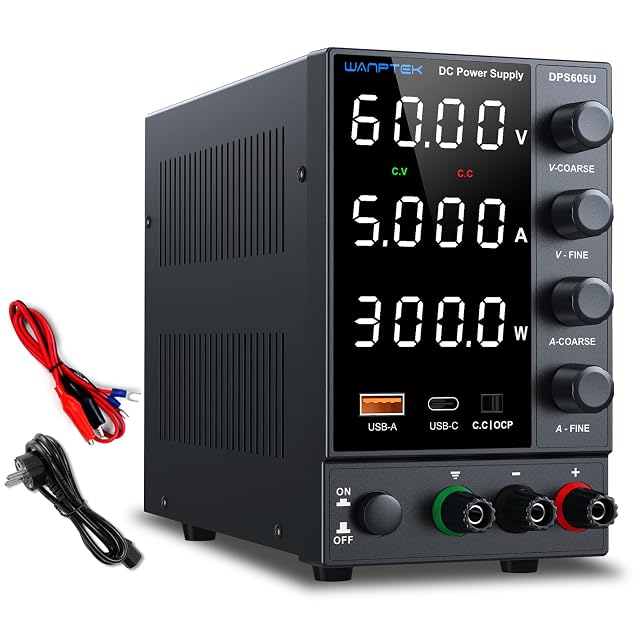
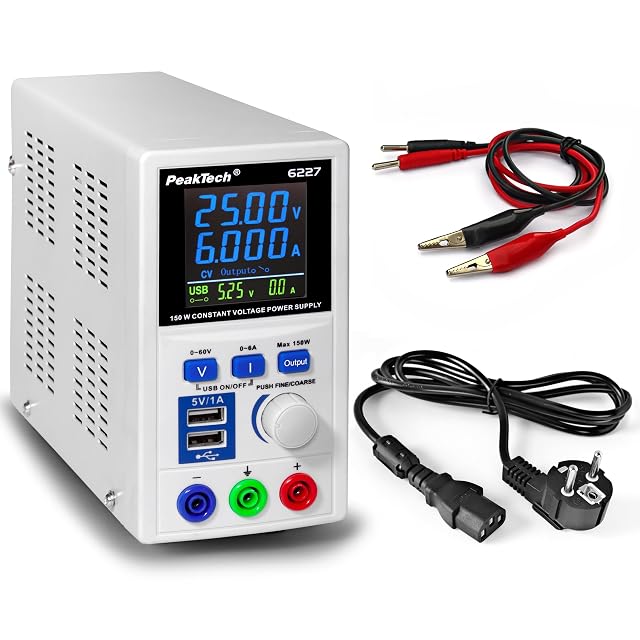
Current limiting protects the circuit, and the ripple figure tells the rest
The best bench power supplies for 2026
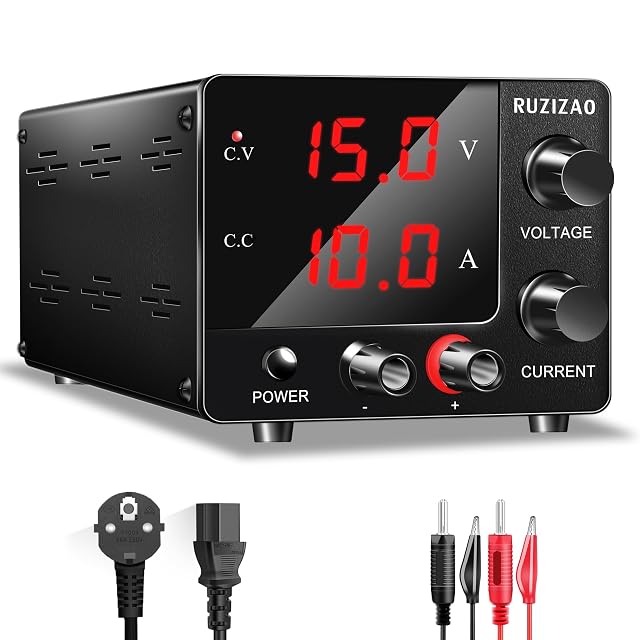
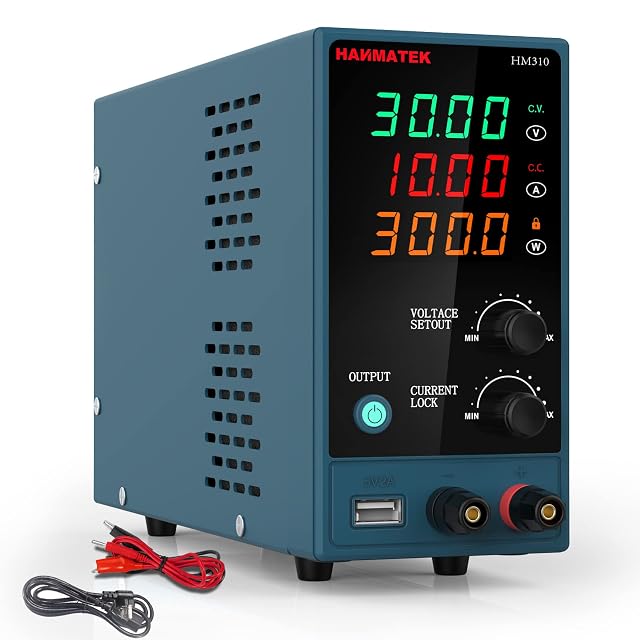
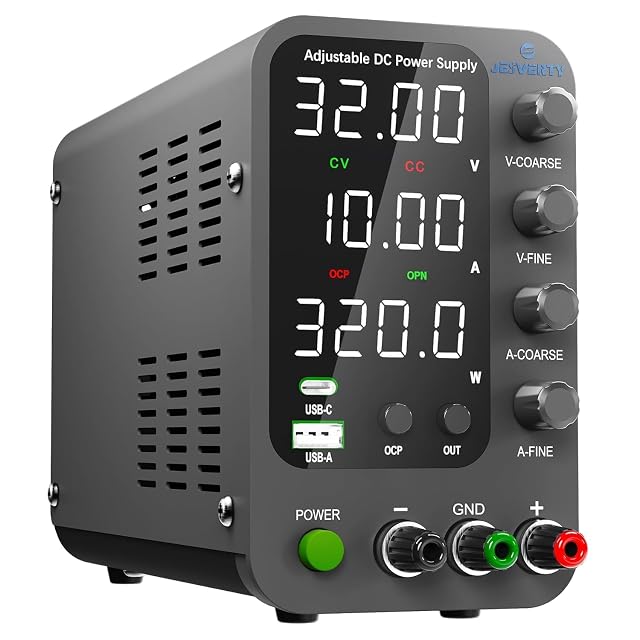
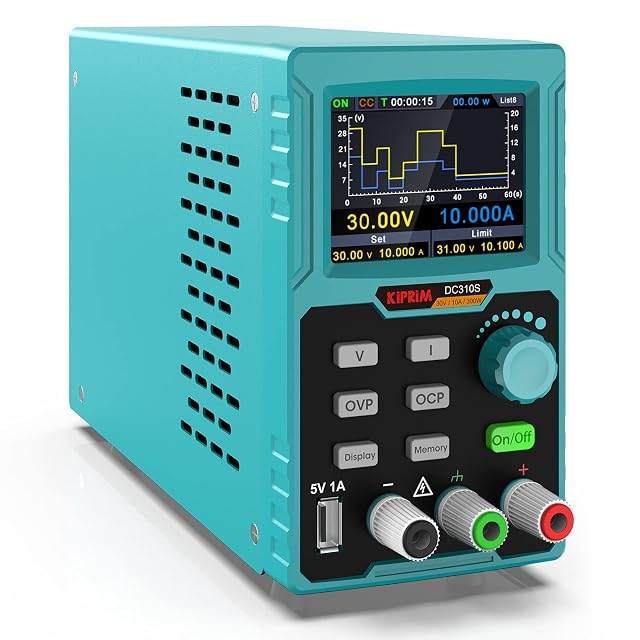
A bench power supply feeds a circuit under test with a set voltage and, crucially, a set current limit, so that a short or a wrongly wired board draws a controlled amount instead of burning. The voltage and current range is published per channel, and the product of the two is the power it can deliver — a supply quoted at a high voltage and a high current may not give both at once. Channels matter for circuits that need two rails; tracking between them is a published feature. The design divides the shelf: a linear supply is heavier and quieter electrically, a switching supply is lighter and puts more noise on the output, and the figure that describes that noise is ripple, in millivolts, where the maker publishes it. Display resolution — how many digits the voltage and current show — decides how finely a setting can be read, and a stated accuracy sits beside it on the careful listings. Programmability over USB or a network port turns the supply into part of an automated test. Protections — over-voltage, over-current, over-temperature — are listed as present or not. Then the output terminals, whether a remote sense is provided, and the fan noise on a bench. We compare voltage and current range, channels, linear or switching design, ripple, display resolution, programmability and protections.