Equipping an electronics bench
A first soldering bench: station, tips, wire, light, air
A soldering bench is assembled in the order the work touches it: the station heats the tip, the tip carries the solder, the wire brings the metal and the flux, the lamp shows the joint, and the extractor draws the smoke away from the face. The five picks follow that chain rather than a spending ladder. Every figure below is the one the listing publishes, and where a listing leaves a figure out, the gap is named.
By Jean-Benoit Buisson
The soldering station that locks its settings
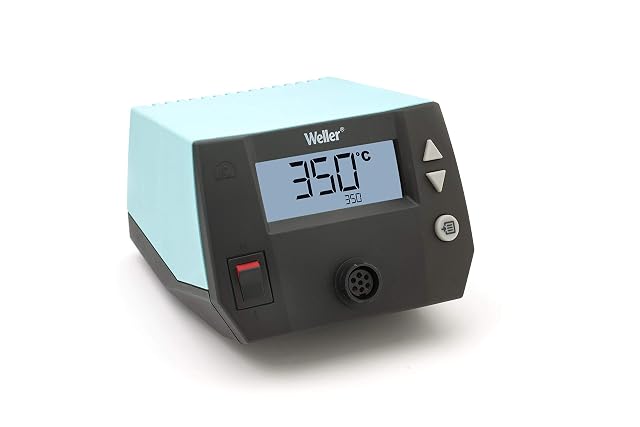
The Weller WE1010 pairs an 85 W supply unit with a 70 W WEP70 iron, adjusts from 100 to 450 °C and is ready in about 28 seconds. It is described as ESD-safe, drops to standby on its own and can be password-protected, which is what a bench shared with other people needs. What it does not name is its tip system.
ET tips named for the WE1010
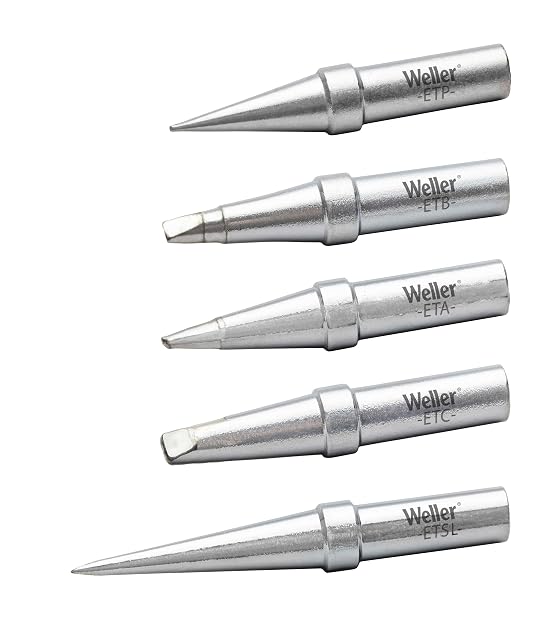
That gap is filled by Weller’s five-piece ET set — ETA, ETB, ETC, ETP and ETSL — whose title names the WE1010. The photograph shows two conical points and three chisels of different widths; the listing gives no sizes or plating. A chisel moves heat into a larger joint, a point reaches between close pins, and the answer on when to replace a soldering tip covers what wears them.
Fine lead-free solder wire with a stated working temperature
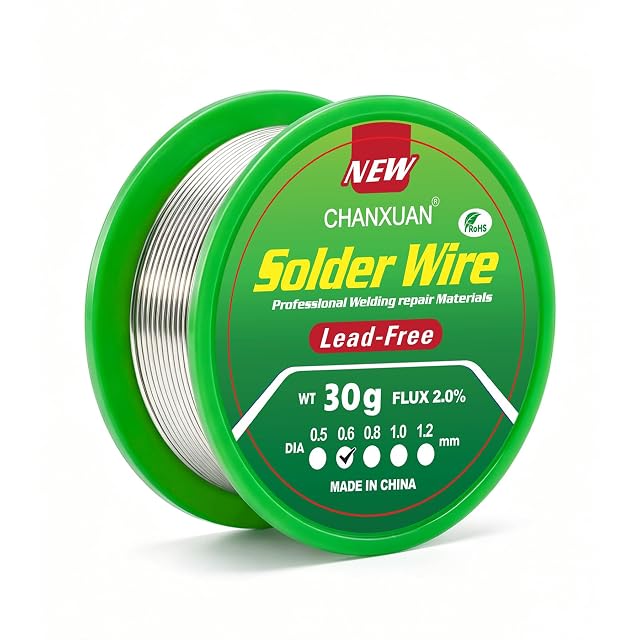
The CHANXUAN reel is Sn99.3 Cu0.7 at 0.6 mm with 2 % rosin flux. Its title says 30 g; the fifth bullet makes that the gross weight, with 20 g of solder on the reel. A 0.6 mm wire suits small pads and SMD leads, and the reel’s 380 ± 20 °C working temperature is a place to start the station from.
Seeing the joint under a magnifier lamp
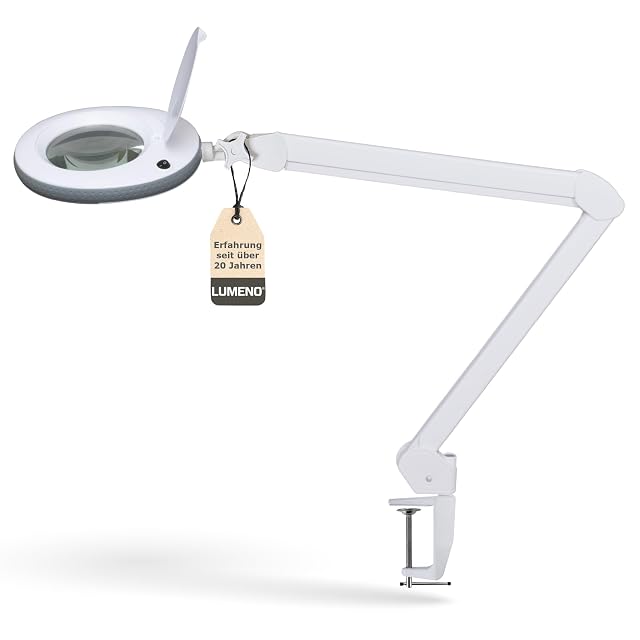
The Lumeno 7215GR magnifier lamp states 5 dioptres and 2.25× through a 127 mm glass lens, 950 lumens with colour rendering above CRI 90, two 42 cm arm segments and a clamp for tops up to 65 mm. A stated dioptre is what lets a lens be compared; a bare “10×” on another lamp cannot be set against it.
Drawing the smoke off the bench
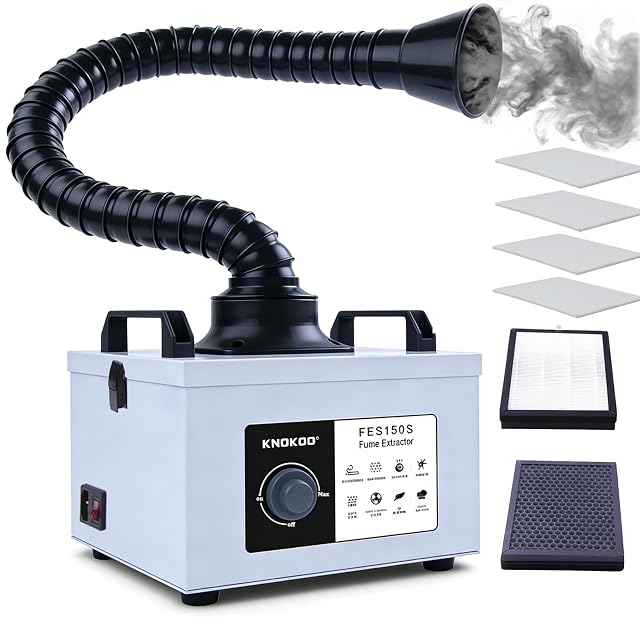
The KNOKOO FES150S moves 200 m³/h through three filter stages that can be replaced one at a time, and sounds an alarm when a filter clogs. Its title names bench soldering and small laser engravers. The advice on setting up an electronics bench covers the surface, light, air and power around these five pieces.
Questions makers ask before buying
Why choose the soldering station and its tips together?
Because tips wear out and the station outlives them. The Weller WE1010 soldering station listing does not name its tip system, and the separate Weller ET set names the WE1010 in its title. Buying both at once settles which tips the station takes before the first set is worn down.
What iron temperature suits lead-free solder wire?
The CHANXUAN reel gives its own figure: a melting point of about 227 °C and a working temperature of 380 ± 20 °C. That is the solder maker’s starting point, not a rule; pad size, tip shape and the board all move it. The answer on choosing a soldering station wattage covers how wattage decides how quickly the tip recovers heat on larger joints.
Does a fume extractor make soldering safe?
This guide does not say so. The KNOKOO FES150S listing describes a pre-filter, an H13 HEPA filter and activated carbon, a clog alarm and about 50 dB, and names soldering fumes among its uses. What protects a person at the bench is set out by the solder and flux makers and by local workplace guidance.