Buying a first 3D printer
A first FDM 3D printer, read by the size it declares
The first question about a filament printer is how large a part it can make, and the answer is a number the maker declares. These five are ordered on that number: the three that publish a build volume come first, smallest to largest, and the two whose listings never state one come last, because a buyer cannot place them on the same line. Speeds and temperatures are reported as their listings print them, as limits rather than promises.
By Jean-Benoit Buisson
Build volume first, because it cannot be changed later
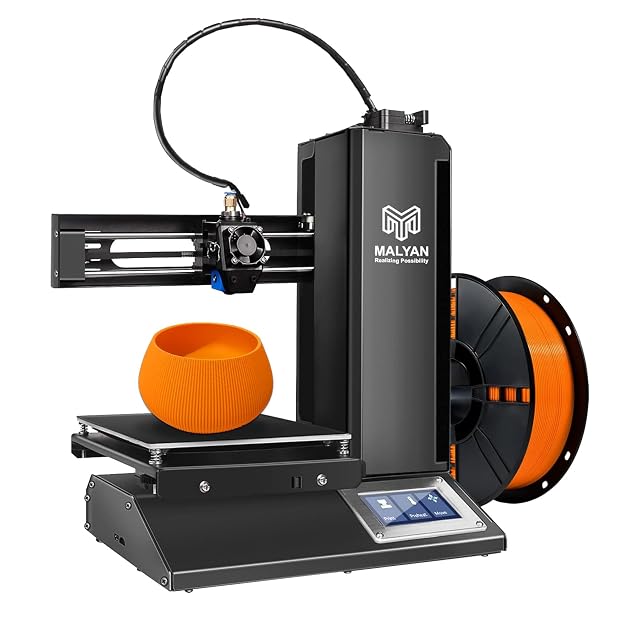
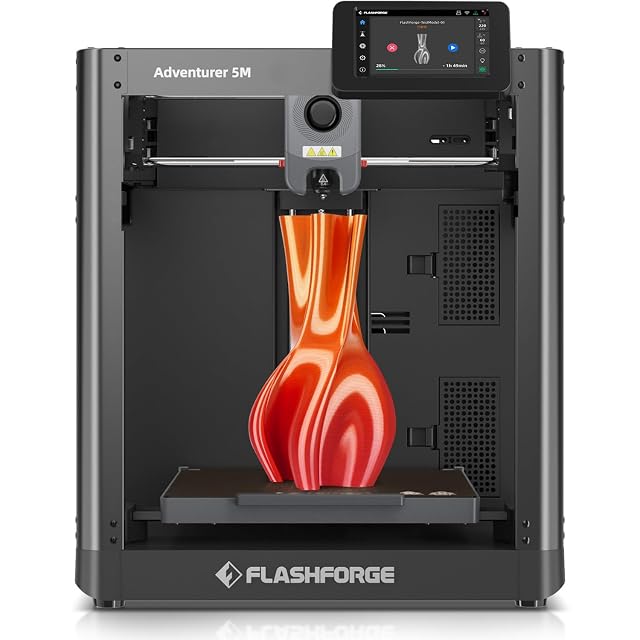
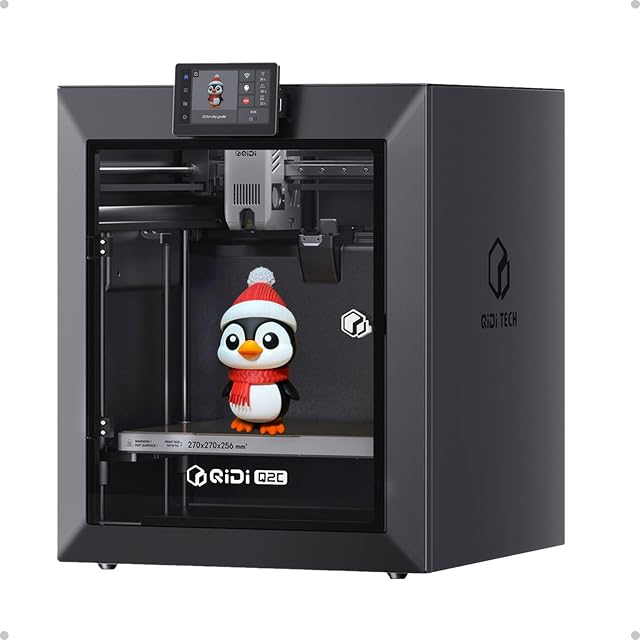
Almost every other limit on a filament printer can be worked around: a nozzle can be swapped, a plate replaced, a setting tuned. The build volume stays what the frame allows. That is why the ordering here follows the declared size — the Malyan M320 at 150 × 150 × 150 mm, the Flashforge Adventurer 5M at 220 × 220 × 220 mm, the QIDI Q2C at 270 × 270 × 256 mm.
A declared size is not a promise about every part
The volume is what the maker states the machine can reach. Tall, thin parts, parts that need a brim, and parts laid flat to avoid supports all use that space differently. Read it as the outer boundary, then decide how close to it the objects you have in mind actually sit. The answer on whether a bigger printer is better sets what a larger bed gives against what it costs to heat, level and house.
Enclosed or open on these five FDM 3D printers
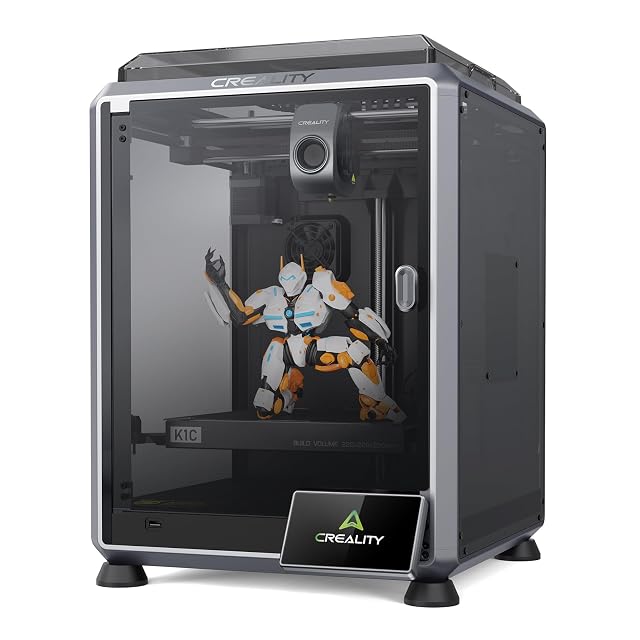
The QIDI Q2C and the Creality K1C are enclosed, and the QIDI listing is plain that the Q2C has no chamber heater and no air filtration. An enclosure keeps warm air around the part, which matters for materials that shrink as they cool, and it is not a fume filter unless the maker says so. The answer on whether an enclosed printer is worth it says which materials it changes results for.
Nozzles, plates and what they open up
The Flashforge 3D printer changes nozzles from 0.25 to 0.8 mm without tools and ships a double-sided PEI plate. The K1C lists a hardened steel nozzle, which is what abrasive filaments filled with carbon fibre need; the answer on hardened nozzles explains when that applies. The Malyan listing names an all-metal hotend and a magnetic plate, and publishes no print speed at all.
The first week, before the second purchase
Whichever printer arrives, the first spool, the first levelling and the first failed print teach more than any listing. The advice on the first week with a 3D printer covers unpacking, the first layer and the settings worth leaving alone at the start.
Questions makers ask before buying
Does a 220 mm build volume mean a 220 mm part will print?
It means the maker declares a 220 mm cube as the space the nozzle can reach. A part that fills it exactly leaves no margin for a brim, a skirt or a first-layer adjustment, so the part that prints comfortably is usually a little smaller than the declared size. The answer on build volume and the largest printable part sets this out.
Why are two printers listed without a build volume?
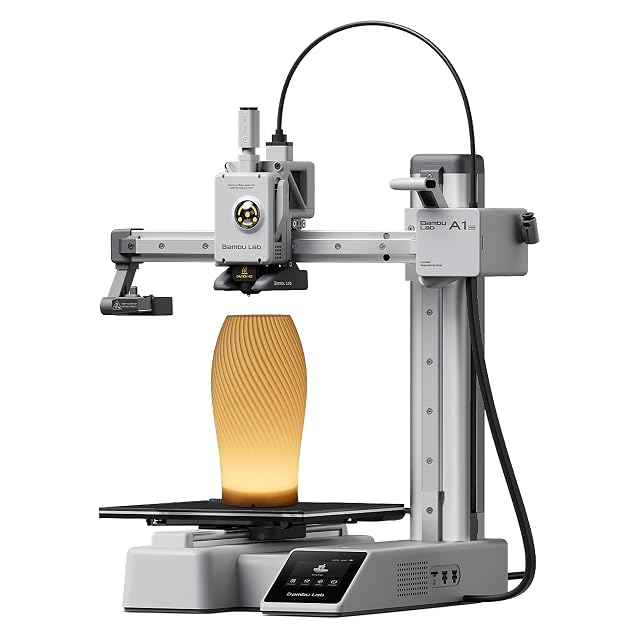
Because their listings do not publish one. The Creality K1C page gives a 300 °C hotend, a hardened steel nozzle and an acceleration figure, and the Bambu Lab A1 Mini page describes automatic calibration, yet neither 3D printer listing states how large a part it makes. They are placed last so the guide does not rank a number that does not exist.
Is 600 mm/s the speed a print will run at?
No. A stated speed is the fastest the motion system is allowed to move, and a real print spends most of its time accelerating, slowing for corners and laying down detail well below that ceiling. The Flashforge listing quotes 600 mm/s as a maximum; the time a job takes is set by the slicer, the model and the chosen quality.