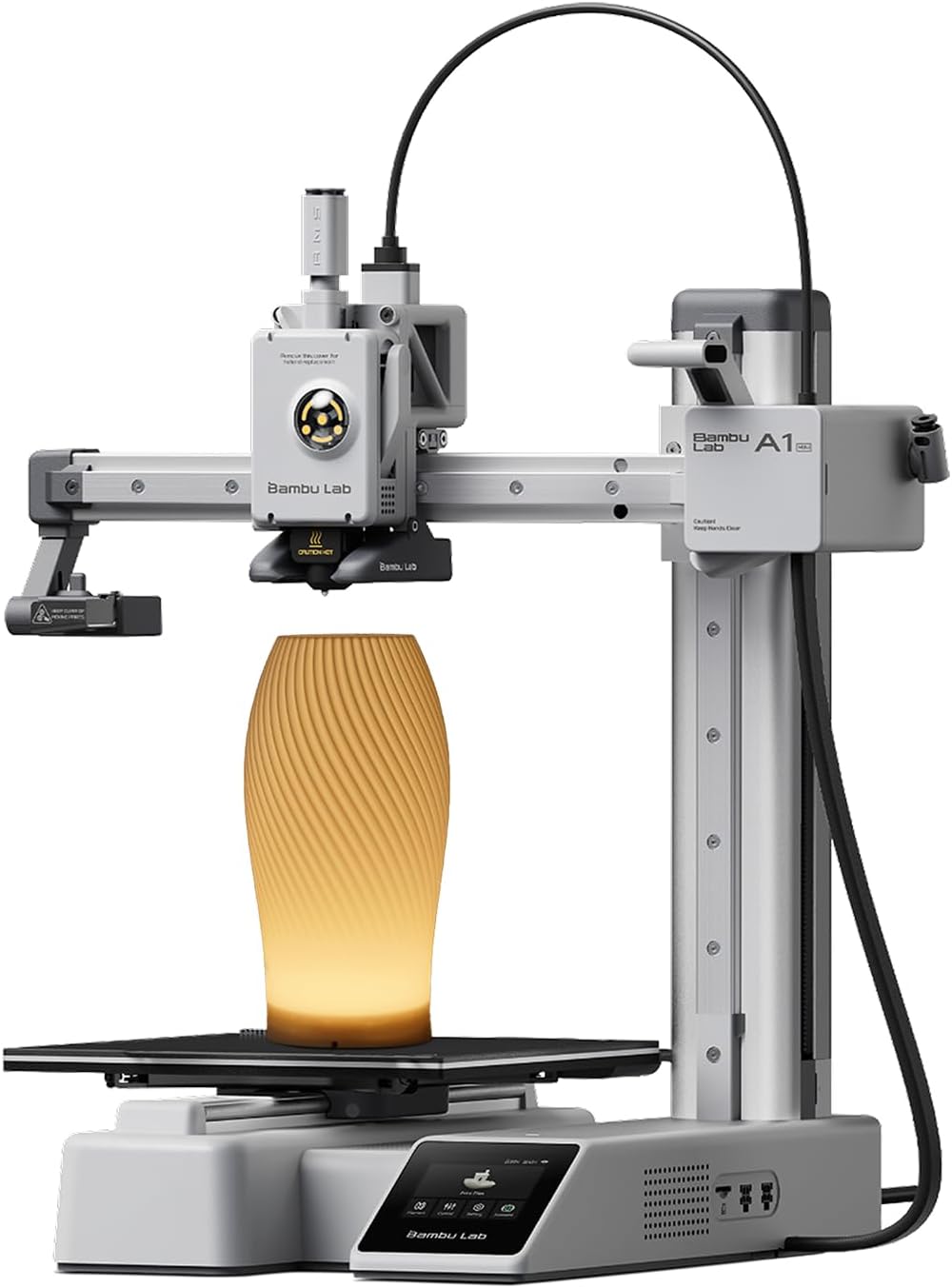
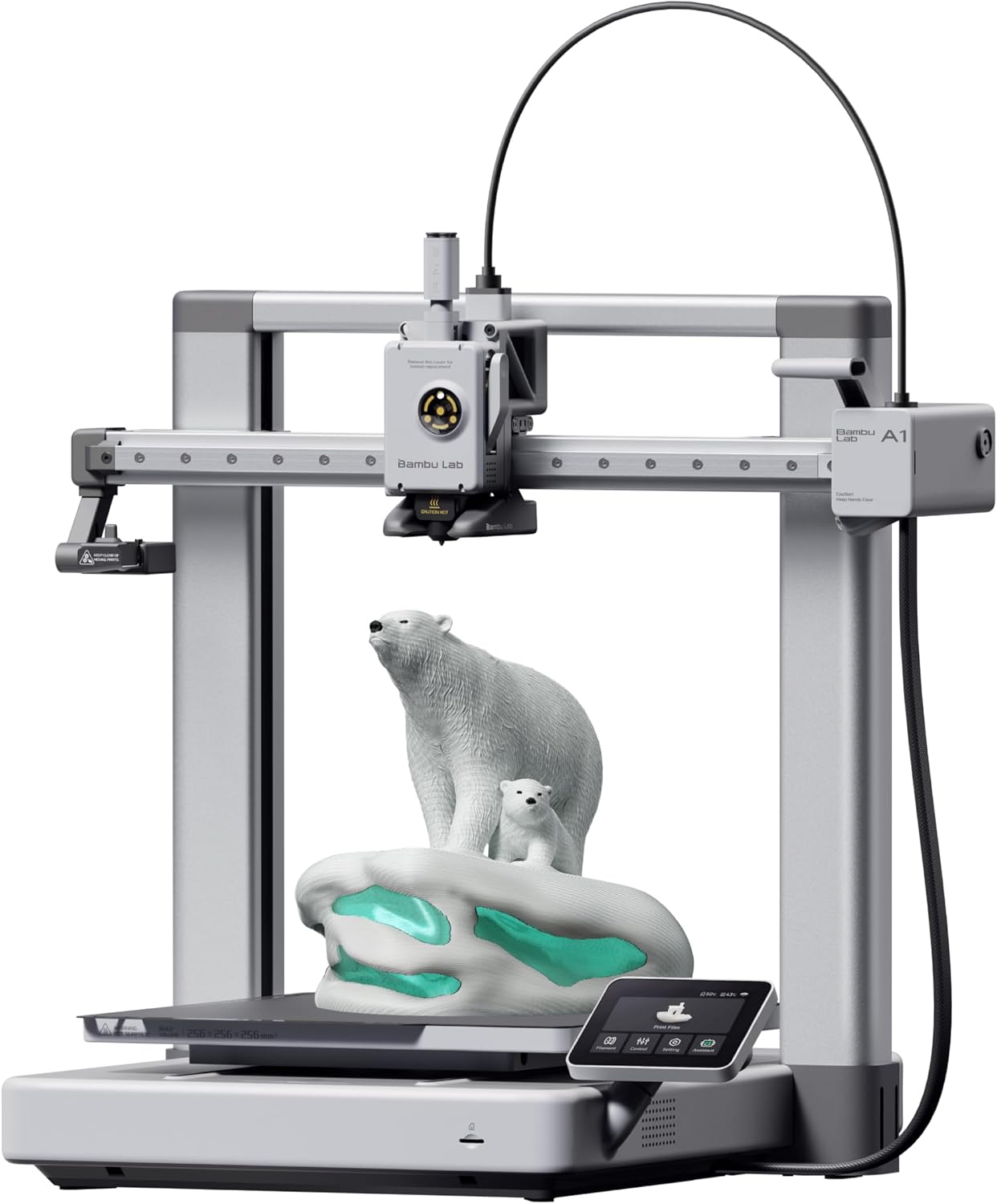
ABS and ASA warp when the air around a print cools it unevenly. The P1S closes that air in, and that is the practical gap between it and an open printer such as the A1.
A rare, useful material list
Most listings say a printer handles many filaments. This one sorts them: ideal, capable, not recommended. It is the most honest part of the page, and it should decide your purchase more than the speed claim.
Compared with the combo
The same printer is sold with an AMS unit as the P1S Combo. If you will never print in color, this version saves that cost.
Where it earns its place, and where it falls short
Strengths
Fully enclosed, which helps ABS and ASA
A plain three-tier material list
Sold by the Bambu Lab Store on Amazon
Compromises
Carbon and glass fiber filaments are listed as not recommended
AMS is not in this listing; see the P1S Combo
No build volume in the bullets
Specifications
Top speed
500 mm/s, stated
Acceleration
20,000 mm/s²
Body
Fully enclosed
Leveling
Automatic
Materials rated ideal
PLA, PETG, TPU, PVA, PET, ABS, ASA
Materials rated capable
PA, PC
Not recommended
Carbon or glass fiber filaments, on this listing
Weight
38.9 lb
Amazon ASIN
B0CHDM8VVZ
Questions makers ask before buying
Can the P1S print carbon fiber filament?
The listing puts carbon and glass fiber in its not-recommended group. PLA, PETG, TPU, PVA, PET, ABS and ASA are its ideal group, with PA and PC as capable.
Is 500 mm/s the speed of a real print?
No. It is a motion limit. The speed of a good part depends on the material and the model.
Our score
8.1/ 10
The sensible step up when you need engineering filaments. The enclosed body is what you pay for, not the speed figure.
What use this one answers, among workshop machines
A maker who wants to print ABS or ASA parts without building an enclosure.
Where this model is cited, among our workshop machines guides
Specifications: the manufacturer sheet for maker machines and tools and the matching Amazon product page. Prices and availability: Keepa. Every figure on this page names its source.
A price quoted in the text of a MakerVerdict page dates from the day that page was written; the live figure beside each product is fetched while you read and replaces it.