Starting with vinyl
A first vinyl cutting kit, from cutting width to garment
The cutter decides the largest design, and everything else in a vinyl kit is used up around it. These picks open with two cutting plotters ordered by published cutting width, 11.4 cm and then 630 mm, because width is what separates a card from a sign. Then come the three supplies a first project reaches for: transfer tape to lift adhesive vinyl, heat transfer vinyl for fabric, and a set of weeding tools to clear what the blade leaves behind.
By Jean-Benoit Buisson
Cutting width sets the largest design
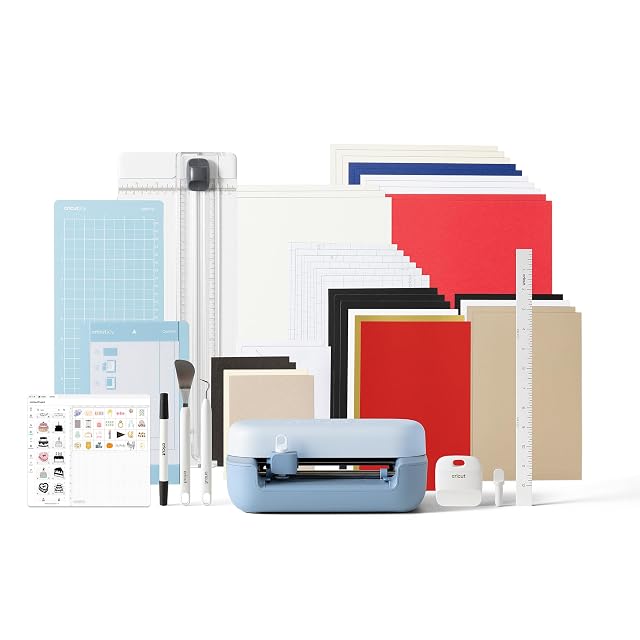
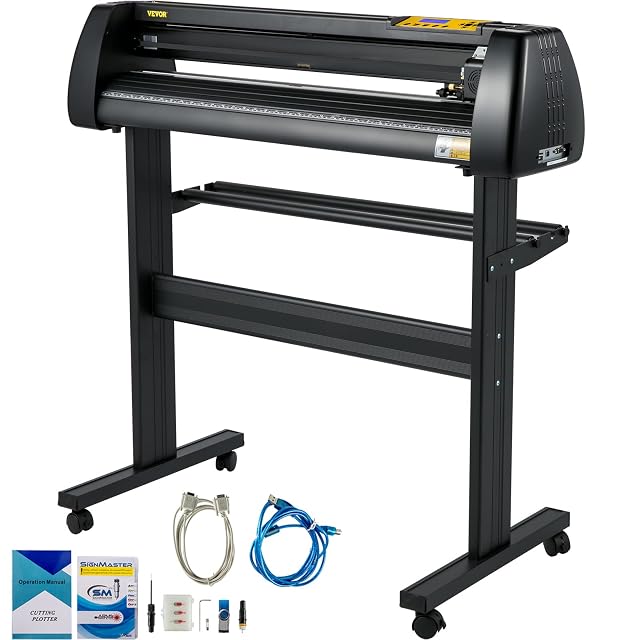
The Cricut Joy 2 cutting plotter cuts 11.4 cm wide, recognises images printed on an inkjet printer and cuts around them, and can write, draw, foil and score. The VEVOR 720 mm cutting plotter takes media up to 720 mm and cuts 630 mm, with a published 10–500 g force range, 10–800 mm/s, pinch rollers, and COM or USB connection to Windows only. One is a desk cutter for cards and stickers; the other is a sign plotter that needs cutting software its listing does not name.
Desk cutter or sign plotter
The two sit at different ends of the hobby. The answer on a Cricut-style cutter or a wide-format plotter sets project size and material range against each kind, and the advice on choosing a first vinyl cutter orders the published figures to compare, from cutting force to software terms.
Transfer tape for adhesive vinyl
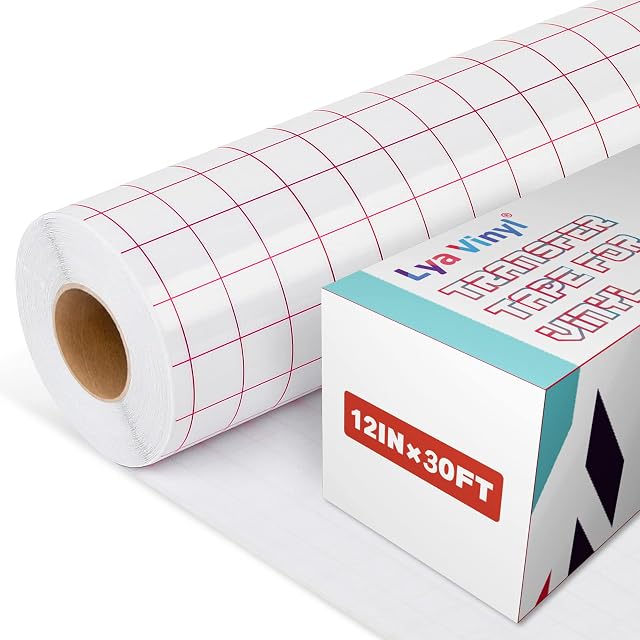
Adhesive vinyl is cut on its backing and then has to move in one piece. The Lya Vinyl roll is the tape that does it, not a vinyl: 30.5 × 919 cm, moderate tack and a red grid for cutting square. The surface it goes onto has to be clean and dry, as its second bullet states.
Heat transfer vinyl, with a time and no temperature
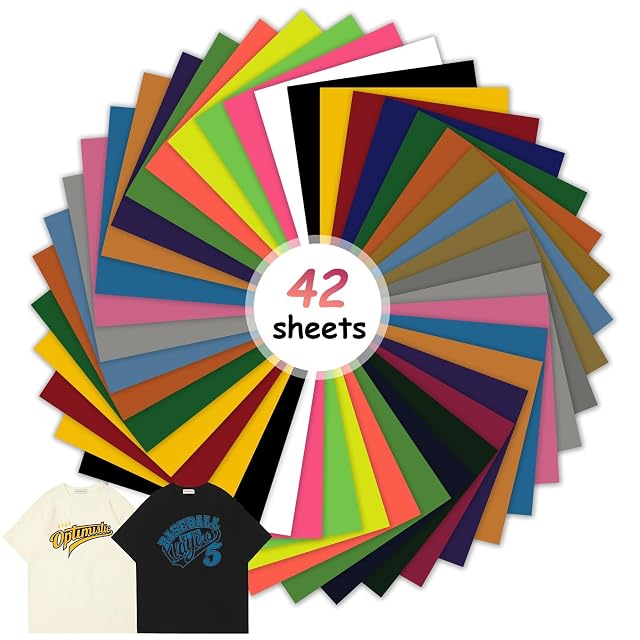
EOPUOZS sells 42 sheets of 30.5 × 20.1 cm in 24 colours, pressed for 10–15 seconds with an iron or a heat press. The listing leaves out the temperature, so the setting has to be completed from the vinyl maker’s own instructions. The answer on pressing heat transfer vinyl that lasts starts from those instructions — temperature, time, pressure and peel — and the garment’s preparation.
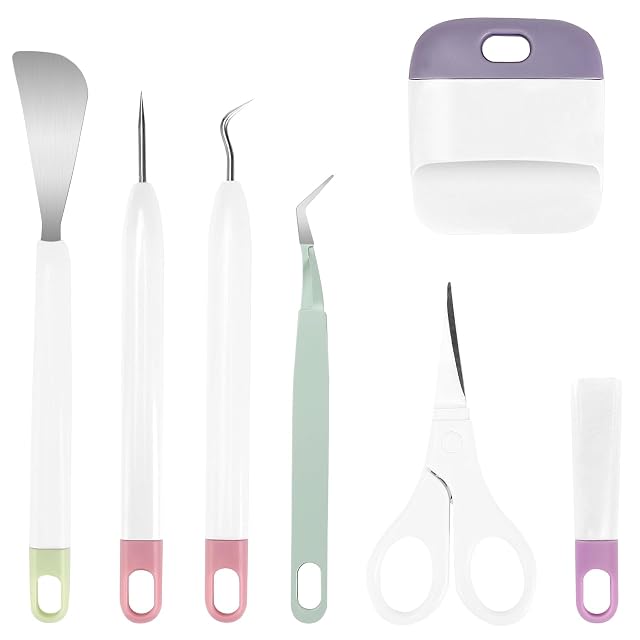
Weeding the negative space
Kasanni’s set names all six pieces: a hook weeder, a straight weeder, reverse-grip hook tweezers, a spatula, a scraper and scissors, with thick grooved handles on the weeder and tweezers. The answer on weeding heat transfer vinyl cleanly takes the order: large waste first, then small pieces with a fine hook.
Questions makers ask before buying
Is an 11.4 cm cutting width enough to start?
For cards, labels and small decals, yes; for a T-shirt front or a sign, no. The Cricut Joy 2 cutting plotter lists 11.4 cm and print-and-cut with an inkjet printer. The VEVOR cutting plotter lists 630 mm, a 10–500 g force range and COM or USB to Windows only. The answer on choosing a vinyl cutter cutting width sets sizes against projects.
Does the Lya Vinyl transfer tape work with these two cutting plotters?
Its listing names Cricut and Silhouette Cameo cutting plotters and similar cutters as the source of the designs it lifts, and gives moderate tack on a 30.5 × 919 cm roll. Transfer tape does not attach to the machine; it lifts cut adhesive vinyl off its backing, so what matters is the vinyl, not the cutter.
What press settings does the EOPUOZS vinyl give?
A time only: 10–15 seconds with an iron or a heat press, and a wait of 24 hours before the first wash, garment turned inside out. The listing gives no temperature and no peel direction, and a time without a temperature is not a complete setting. The answer on pressing heat transfer vinyl that lasts lists the instructions to look for from the vinyl maker.