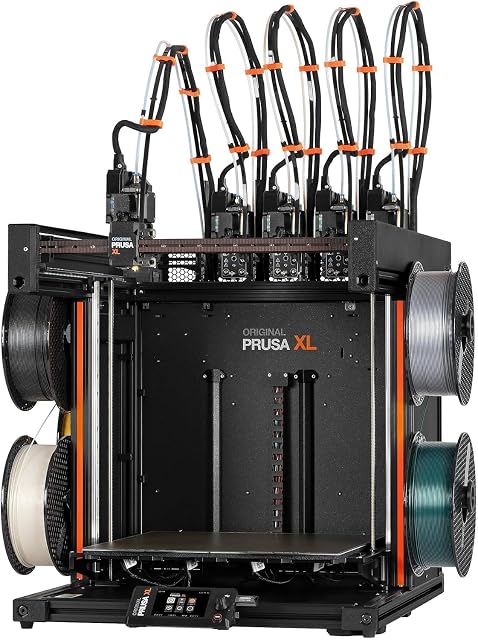
Every colour change costs filament, and the purge is part of the print
The best multicolour 3D printers for 2026
A multicolour printer loads several filaments at once and switches between them during a print, and the way it switches decides both the result and the running cost. The common arrangement feeds every spool into a single nozzle and swaps them there, which means the old colour has to be pushed out before the new one lands on the part — the purge, a waste of filament that grows with every change and that a maker describes, if at all, in a tower or a chute rather than a figure. The alternative is several toolheads that park and swap, which wastes far less and costs more to build. The number of filaments the unit loads is published, and whether the feeding unit is sold with the printer or separately is a real price difference. Material compatibility matters more here than anywhere: a feeder that handles rigid filaments well may not accept flexible ones, and the listing that says so saves a jam. Then the usual printer specifications — build volume as declared, enclosure, levelling — and the software, because colour is assigned in the slicer before it reaches the machine. We compare filaments loaded, switching method, purge handling, build volume, enclosure, material limits and whether the feeder is included.