Logic voltage first, then pins, then the wireless it really has · review
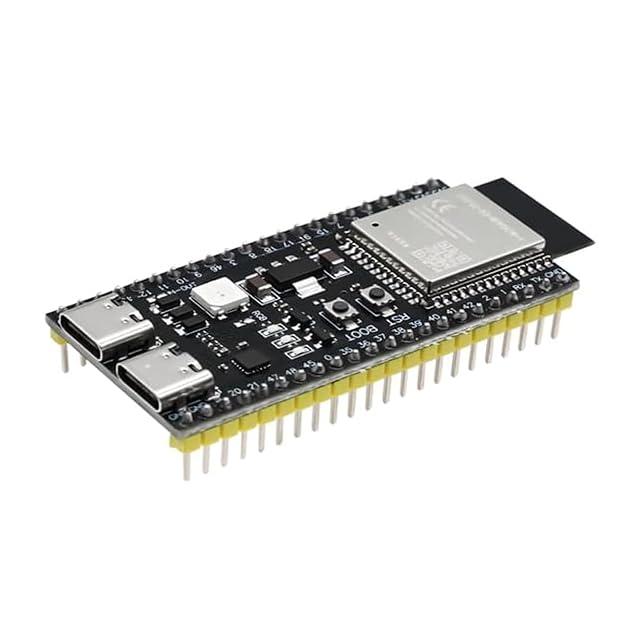
Waveshare ESP32-P4-POE-ETH, Ethernet with PoE, MIPI camera and display review
An ESP32-P4 development board with 100M Ethernet and a PoE module, MIPI camera and display interfaces, USB 2.0 OTG, a microphone and an H.264 encoder, whose listing names no wireless radio.
The bottom line A wired multimedia board with an unusual feature set — PoE, MIPI camera and display, H.264 — and serious security features. It is not a wireless board by anything written, and its voltage and toolchain are unstated.
The ESP32-P4-POE-ETH listing, bullet by bullet
Five bullets: an ESP32-P4 with RISC-V dual-core and single-core processors, detailed ROM, RAM and PSRAM figures and 32 MB of NOR flash; MIPI-CSI, MIPI-DSI, USB 2.0 OTG, 100M RJ45 Ethernet, an SDIO 3.0 TF slot, a microphone, a speaker header and a PoE module; JPEG, pixel processing, an image signal processor and an H.264 encoder; 2 × 20 GPIO headers with 27 programmable GPIO; and Secure Boot, flash encryption, cryptographic accelerators, a TRNG and access protection.
Power over Ethernet on the Waveshare board
One cable for data and power. A PoE module lets the board run from a PoE switch with no separate supply, which is what makes it suitable for cameras and panels mounted away from sockets.
No radio in the text
None of the five bullets mentions Wi-Fi or Bluetooth. This review does not add what the listing leaves out; for wireless projects, the GERUI and ELEGOO ESP32 boards reviewed here list their radios explicitly.
Security features listed
Secure Boot and flash encryption protect firmware on a deployed device. They are named, not configured, and the listing leaves the details to the documentation.
Availability
At the last look-up, the German, French, Italian and Spanish Amazon stores were asking 29 € to 41 €.
It is sold in the American and British Amazon stores as well, in their own currency, which the euro figures above leave out on purpose.
Every figure here is Keepa’s reading on the date this page was last updated. Stock and prices can change at any time.
Prices quoted in this text were read on 15 September 2026. The live price is at the top of the page.
Where it earns its place, and where it falls short
Strengths
100M RJ45 Ethernet with a PoE module, powering and connecting the board over one cable
MIPI-CSI and MIPI-DSI for camera and display, with JPEG, ISP and H.264 encoding
Secure Boot, flash encryption, cryptographic accelerators and a TRNG
Compromises
No wireless radio listed
No logic voltage or programming environment
A dense memory list that does not say which figures an application can use
Specifications
Processor
ESP32-P4 with RISC-V 32-bit dual-core and single-core processors, first bullet
Logic voltage
Absent from the listing
Memory
128 KB HP ROM, 16 KB LP ROM, 768 KB HP L2MEM, 32 KB LP SRAM, 8 KB TCM, 32 MB in-package PSRAM and 32 MB on-board NOR flash, first bullet
Pin functions
2 × 20 GPIO headers with 27 programmable GPIO, fourth bullet; MIPI-CSI, MIPI-DSI, SDIO 3.0 TF slot, microphone and speaker header, second bullet
Wireless
Absent from the listing
USB connector
USB 2.0 OTG high speed, second bullet; USB-C power supply, title
Programming environment
Absent from the listing
Amazon reference
B0FN4FX21T (same reference on 6 Amazon marketplaces)
EAN
0790885236853
Questions makers ask before buying
Does the Waveshare ESP32-P4-POE-ETH have Wi-Fi?
The listing names no wireless radio. It describes 100M Ethernet with a PoE module, and nothing in the five bullets mentions Wi-Fi or Bluetooth.
What video features does the ESP32-P4-POE-ETH list?
The third bullet lists JPEG codecs, a pixel processing accelerator, an image signal processor and an H.264 video encoder, and the second lists MIPI-CSI and MIPI-DSI interfaces.
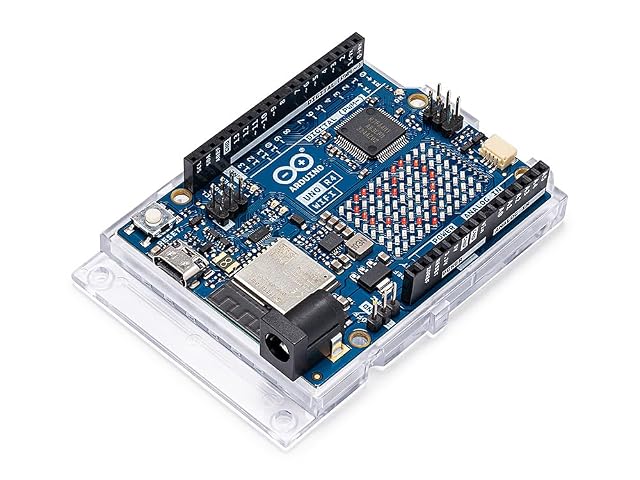
Renesas RA4M1 (Arm Cortex-M4) with ESP32-S3 · Wi-Fi and Bluetooth 5.0 · USB-C · CAN and Qwiic · 12-bit DAC and op-amp · 12 × 8 LED matrix · Arduino IDE
An Arduino UNO R4 WiFi pairing a Renesas RA4M1 Arm Cortex-M4 microcontroller with an ESP32-S3 radio chip, with USB-C, CAN, a Qwiic connector, a 12-bit DAC and a 12 × 8 LED matrix on board.
Best for: A learner or maker who wants the Arduino ecosystem with Wi-Fi, and on-board feedback from the LED matrix.
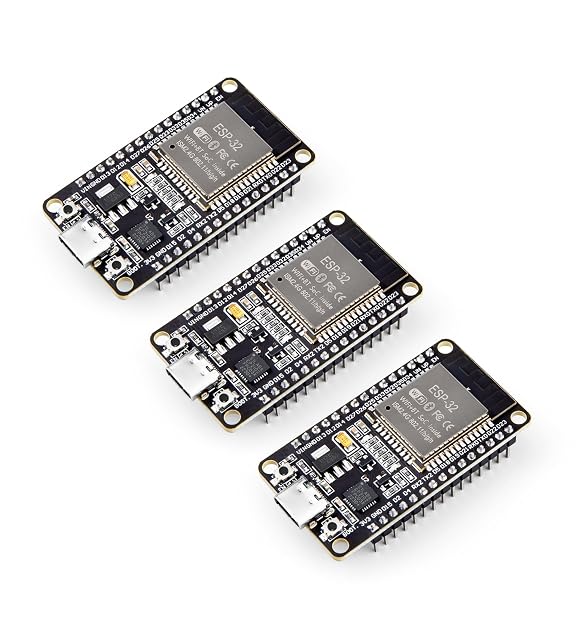
3 boards · dual-core 32-bit, up to 240 MHz · Wi-Fi 2.4 GHz and Bluetooth · GPIO, SPI, I2C · USB-C · Arduino IDE compatible · OTA firmware updates
A pack of three ESP-32 development boards with dual-core 32-bit processors up to 240 MHz, Wi-Fi and Bluetooth, USB-C and Arduino IDE compatibility, whose listing gives no memory or pin counts.
Best for: A beginner or classroom starting with ESP32 in the Arduino IDE, with spare boards for experiments.
ESP32-S3, up to 240 MHz, ULP coprocessor · 512 KB SRAM, 8 M PSRAM · 45 programmable GPIO · 2.4 GHz Wi-Fi and Bluetooth 5 LE · no logic voltage, USB or IDE published
An ESP32-S3 development board on the WROOM-1-N16R8 module, with Wi-Fi, Bluetooth 5 LE, 45 programmable GPIO and external PSRAM, whose listing names neither its logic voltage, its USB connector nor a programming environment.
Best for: A maker who already works with ESP32 boards and wants an S3 with extra PSRAM at a low price.