Pixel pitch describes the screen, not the tolerance of the part · review
Phrozen Sonic Mini 8K S, 22 µm XY review
A 7.1 inch 8K mono-LCD resin printer that publishes a 22 µm XY resolution and a 165 × 72 × 170 mm build volume, and supports several third-party slicers.
The bottom line The listing gives the resin figure that matters most for comparison — pixel pitch — along with the build volume and slicer support. It says nothing about the vat, the film or handling resin, and those have to come from the maker’s documentation.
The Sonic Mini 8K S listing, bullet by bullet
Five bullets: a beginner-friendly printer with an attractive price-to-performance ratio; an XY resolution of 22 micrometres from the 8K mono LCD; a build volume of 16.5 × 7.2 × 17 cm with a load capacity of up to 10 kg; support for open-source software and slicers such as Lychee, Chitubox and Tango; and precise Z-axis calibration.
A pitch, published
22 µm is the figure that lets this printer be compared. Resolution depends on screen size; pixel pitch does not. This listing publishes both, and the page reports the pitch as a specification of the screen, never as a tolerance on a part.
A tall, narrow volume
165 × 72 × 170 mm suits standing miniatures and small parts printed at an angle. The 72 mm dimension is the limit to check before planning a wider piece.
What the page does not cover
Light source, vat, release film and kit contents are all absent, and there is no word on resin handling or ventilation. The resin maker’s safety data sheet applies to every bottle used in it.
Availability
At the last look-up, the German, French, Italian and Spanish Amazon stores were asking roughly 361 €.
The American and British Amazon stores returned no entry, so the buy button there opens a search rather than a missing page.
Every figure here is Keepa’s reading on the date this page was last updated. Stock and prices can change at any time.
Prices quoted in this text were read on 15 September 2026. The live price is at the top of the page.
Where it earns its place, and where it falls short
Strengths
Publishes the pixel pitch, 22 µm, which the other resin printer in this family does not
Support for open-source software and slicers including Lychee, Chitubox and Tango
A stated platform load capacity of up to 10 kg
Compromises
No light source, vat, film or ventilation information
A narrow build area of 72 mm in one direction
Absent from the US and UK stores at the time of reading
Specifications
Screen resolution
8K mono LCD, 7.1 inch, title and second bullet
Pixel pitch
22 µm, given as an XY resolution of 22 micrometres
Build volume
165 × 72 × 170 mm, title; 16.5 × 7.2 × 17 cm in the third bullet
Light source
Absent from the listing
Vat
Absent from the listing
Film
Absent from the listing
Published ventilation provision
Absent from the listing
Kit contents
Absent from the listing
Amazon reference
B0C3CT44YM (same reference on 4 Amazon marketplaces)
EAN
4711117884914
Questions makers ask before buying
Is 22 µm the accuracy of a print?
No. It is the XY resolution the maker publishes, which is the size of the smallest step the screen can project. How closely a part matches its model also depends on the resin, exposure, supports and calibration.
Which slicers does it support?
The fourth bullet names Lychee, Chitubox and Tango, and describes support for open-source software.
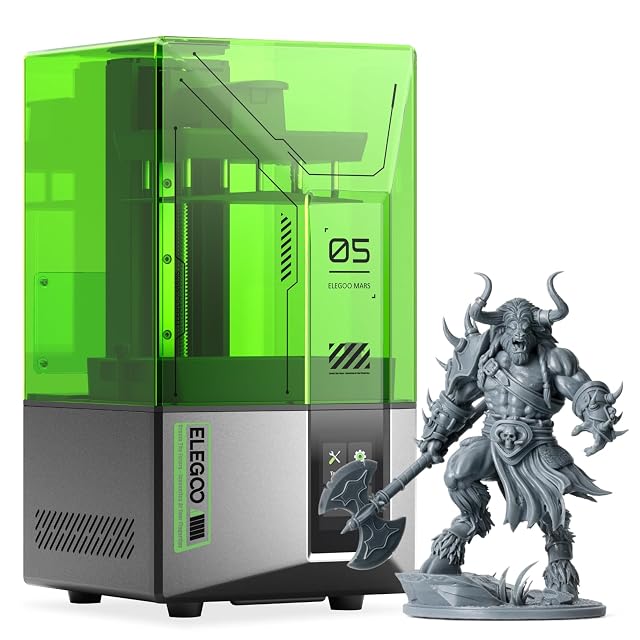
4K mono LCD · COB light source · 143.43 × 89.6 × 150 mm build volume · one-click auto-levelling · residue detection · overheat stop above 80 °C LED temperature
A 4K mono-LCD resin printer with one-click auto-levelling, a sensor that detects residue before it damages the screen, and an overheat cut-out, whose listing does not publish the pixel pitch.
Best for: A first resin printer for miniatures, where protection against a damaged screen and a self-check matter more than size.
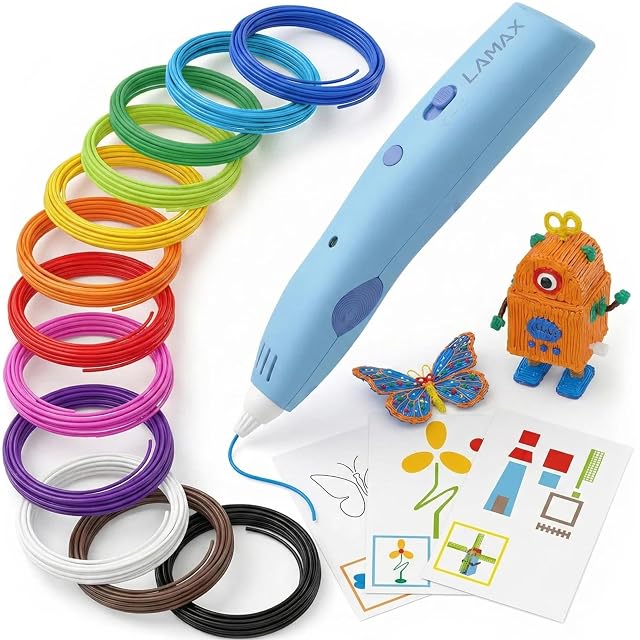
Low-temperature PCL, 1.75 mm · 2 speeds and 2 temperature levels · cordless, USB-C charging · TouchSafe design · 37 m of PCL in 12 colours included
A cordless 3D pen for children that draws with low-temperature PCL filament, with two speeds and two temperature levels, and a maker’s note that it is used according to the instructions and under supervision.
Best for: A younger child’s first 3D pen, used with an adult nearby, where a low-temperature filament is the point.
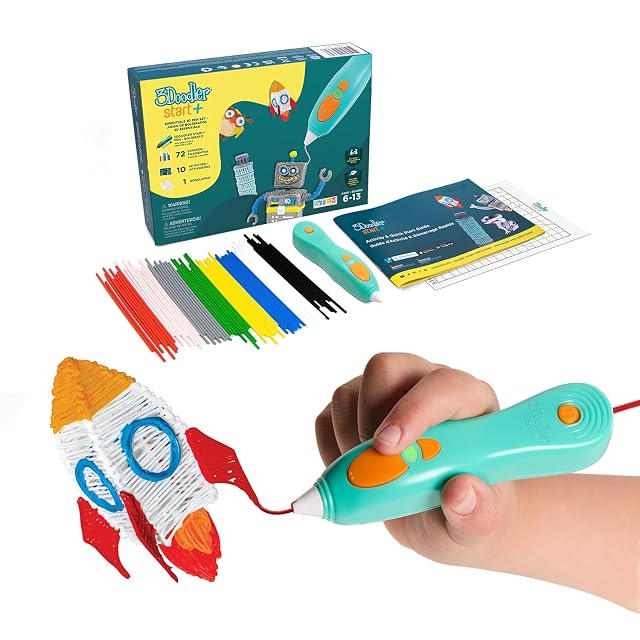
Cool-touch design, no external hot parts · one button · reverse function · cordless, USB-C charging · 72 filament strands · ages 6 to 13
A cordless 3D pen for children aged 6 to 13 with a cool-touch design and no external hot parts, sold with 72 filament strands and a guide of ten projects, whose listing names neither the filament material nor a temperature.
Best for: A child from six making simple projects from a guided activity book, with refills bought from the same maker.