The frame and the motion system decide more than the speed on the box · review
QIDI Q2C enclosed CoreXY, 270 mm build volume review
An enclosed CoreXY printer with a 270 × 270 × 256 mm build volume and a nozzle-integrated levelling sensor, whose listing states clearly what it lacks compared with the Q2: no chamber heater, no AI camera, no air filtration.
The bottom line The most candid listing in the family: a published volume, named kinematics, and a bullet devoted to what the model leaves out. It suits someone who reads that bullet and plans the ventilation the missing filter would otherwise have handled.
The QIDI Q2C listing, bullet by bullet
Eight bullets: optional modular components added to the Q2’s core specification; a note that the Q2C differs from the Q2, lacking the chamber heater, the AI camera and the 3-in-1 air filtration, with an optional HD camera without AI detection; a nozzle-integrated sensor for an automatic first layer; a full-metal CoreXY structure with linear rails for up to 600 mm/s; a reinforced 1.5GT belt system; automatic levelling, filament detection, tangle detection through the QIDI BOX and power-loss recovery, with PPS-CF printable using a high-temperature nozzle up to 370 °C; a 15-minute setup; and an open-source base.
The bullet that says what is missing
Few listings subtract. This one tells the buyer that three features of the more expensive model are absent. That is useful on an enclosed printer, because the filter and the chamber heater are exactly what an enclosure is usually bought alongside.
An enclosure without a filter
The frame keeps warm air around the print, which suits ABS and ASA. Fumes stay inside until the door opens, and the Q2C does not filter them. The ventilation guidance of the filament maker is the reference, and this page does not describe the enclosure as making indoor printing safe.
Engineering filaments and their conditions
PPS-CF is named with a condition: a high-temperature nozzle up to 370 °C. The listing does not say whether that nozzle is included, and a buyer planning carbon-filled materials should confirm it before ordering.
Availability
At the last look-up, the German, French, Italian and Spanish Amazon stores were asking 349 € to 359 €.
The American and British Amazon stores returned no entry, so the buy button there opens a search rather than a missing page.
Every figure here is Keepa’s reading on the date this page was last updated. Stock and prices can change at any time.
Prices quoted in this text were read on 15 September 2026. The live price is at the top of the page.
Where it earns its place, and where it falls short
Strengths
Publishes a full build volume and says in its own bullet which Q2 features this model does not have
A nozzle-integrated levelling sensor that the maker says works regardless of the plate’s condition
Open-source base, filament detection and power-loss recovery listed together
Compromises
No chamber heater and no air filtration, so enclosed printing of fume-producing plastics needs its own ventilation plan
The HD camera is an optional component and does not support AI detection, as the listing states
Tangle detection is listed as working through the QIDI BOX, a separate component
Specifications
Build volume
270 × 270 × 256 mm, stated in the title
Motion system
Full-metal CoreXY structure with precise linear rails and a reinforced 1.5GT belt system, fourth and fifth bullets
Levelling method
Automatic levelling with a sensor integrated into the nozzle, third bullet
Hotend
Handles demanding materials such as PPS-CF with a high-temperature nozzle up to 370 °C, sixth bullet
Bed temperatures
Absent from the listing
Bed surface
Absent from the listing
Enclosure
Enclosed, stated in the title; the second bullet specifies no chamber heater and no 3-in-1 air filtration system, unlike the Q2
Published speed
Up to 600 mm/s, fourth bullet; a motion maximum
Amazon reference
B0FVF1878S (same reference on 4 Amazon marketplaces)
EAN
0674519883067
Questions makers ask before buying
How does the Q2C differ from the Q2?
The second bullet states it directly: the Q2C has no chamber heater, no AI camera and no 3-in-1 air filtration system, and its HD camera is optional without AI detection.
Does an enclosure make printing ABS indoors unproblematic?
An enclosure holds warmth around the print, which helps ABS and ASA with warping. It does not remove fumes, and this model has no filtration system; the filament maker’s ventilation guidance applies.
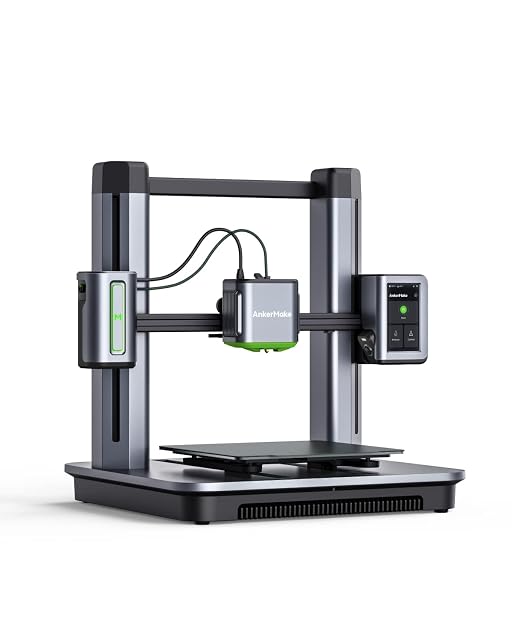
No build volume published · 500 mm/s after PowerBoost 2.0 update · 7 × 7 auto-levelling · direct extruder · camera with failure detection · die-cast aluminium frame
A printer whose 500 mm/s maximum depends on a firmware, slicer and app update, with 7 × 7 auto-levelling and a camera that pauses a failed print, and a listing that gives no build volume.
Best for: A buyer who prints long jobs unattended and values a camera that stops a failed print more than a published build volume.
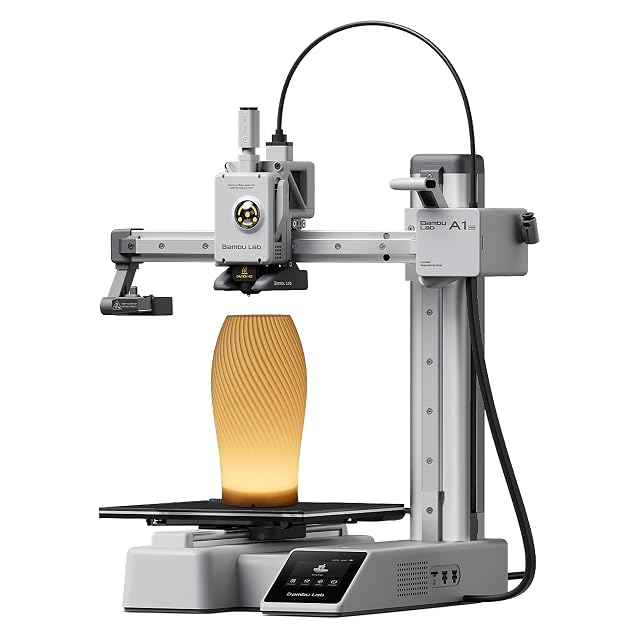
No build volume published · fully automatic calibration · eddy-current nozzle pressure sensor · LED lamp set included · MakerWorld and Bambu Handy app
A compact printer bundled with an LED lamp kit, whose listing describes an eddy-current sensor that measures nozzle pressure and fully automatic calibration, and publishes neither a build volume nor a speed.
Best for: A beginner who wants a printer that calibrates itself and a ready-made first project, and who is content to work inside the maker’s app and library.
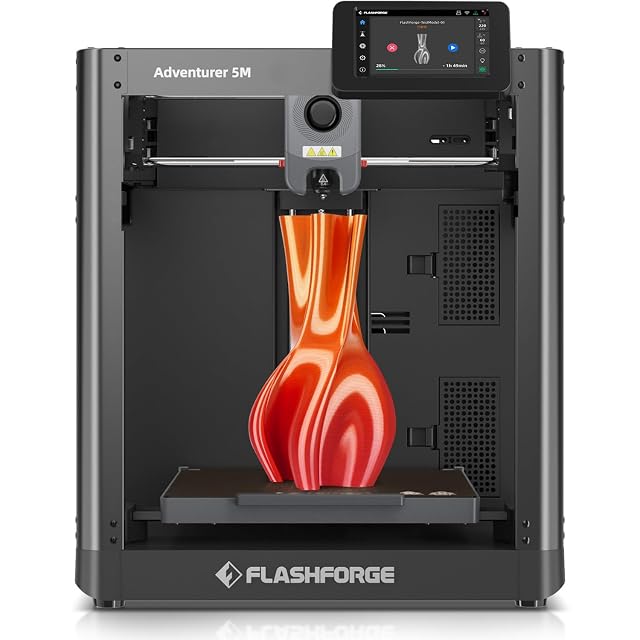
220 × 220 × 220 mm build volume · all-metal CoreXY · one-click automatic levelling · 3-second quick-change nozzles 0.25 to 0.8 mm · double-sided PEI plate · 600 mm/s maximum
A CoreXY printer with a 220 mm cube build volume, tool-free nozzles in four diameters that change in three seconds, and a double-sided PEI plate whose back is meant for PETG.
Best for: Someone printing everyday PLA and PETG parts who wants a published 220 mm volume and the option of a fine or a fast nozzle.